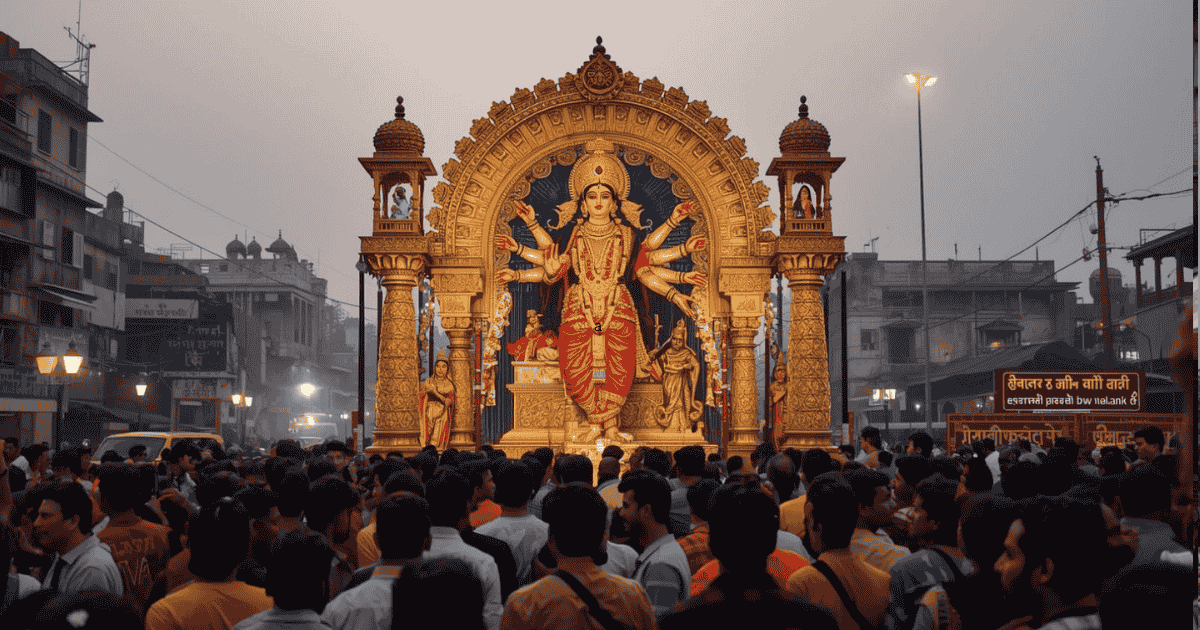
The Durga Puja celebration is internationally famous and included into the UNESCO Intangible Cultural Heritage list in December 2021. The global recognition of the celebration is the greatest award which confirms the spectacular and colorful nature of the celebration in West Bengal due to its cultural heritage and traditions.
| Festival Day | Date (2026) | Day | Notes |
|---|---|---|---|
| Mahalaya | October 16, 2026 | Friday | Start of Devi Paksha |
| Maha Shashthi | October 17, 2026 | Saturday | First major day of Durga Puja |
| Maha Saptami | October 18, 2026 | Sunday | Worship continues |
| Maha Ashtami | October 19, 2026 | Monday | Sandhi Puja & Kumari Puja |
| Maha Navami | October 20, 2026 | Tuesday | Navami rituals |
| Vijaya Dashami | October 21, 2026 | Wednesday | Farewell & Visarjan |
See Also: Kolkata Fatafat Today Result and 2026 Chart
UNESCO Recognition
The procedure of receiving the status of the UNESCO cultural heritage has started in 2019 when the Indian Ministry of Culture has chosen the scientist Tapati Guha-Thakurta for creating the dossier on the Durga Puja celebration.
The representatives of the other countries have estimated the nomination of the Durga Puja celebration at the 16th session of UNESCO in Paris that took place from December 13 to December 15 and have accepted it. Generally, the process of estimation includes proving the significance of the celebration as the example of the intangible cultural heritage and community relations.
The Intangible Cultural Heritage is the manifestation of the traditions of generations defining the identity and continuity of the community. The Durga Puja celebration is recognized by UNESCO as the example of artistic creativity, social inclusiveness, traditional craftspersons’ skills, and cultural heritage of Bengali communities all over the world.
Nomination Process
The procedure of documenting has been made on the basis of the results of the intensive fieldwork and information about various aspects of the Durga Puja celebration including traditions, community practices, artistic innovations, economic impact, and transformation of the celebration from the private into the public one.
Influence on Global Recognition
The receipt of the status of the Intangible Cultural Heritage will provide the additional opportunities for international tourism and cultural exchange as one of the celebrated practices in the world.
Historical Development
The Durga Puja celebrations were initiated by the Sabarna Roy Choudhury family in 1610 at their Barisha residence. The family initiated the longest tradition of the Durga Puja celebration development in Kolkata including worship, idol-making, and feasting.
The famous Shobhabazar Rajbari Puja was initiated by Nabakrishna Dev in 1757. He was the initiator of the aristocratic zamindari practice of celebrating the holiday. The aristocrats initiated the template of the modern theme-based festivals including the elaborate decoration, cultural activities, and hospitality.
The transformation into the Barowari community pujas took place in the early twentieth century. The first puja in Kolkata FF was organized by Bhowanipore Sanatan Dharmatsahini Sabha in 1910 allowing the common people to celebrate the holiday rather than wealthy citizens. Thus, this changed the social character of the celebration.
| Year | Milestone | Significance |
|---|---|---|
| 1610 | Sabarna Roy Choudhury family puja | Oldest continuous Durga Puja in Kolkata at Barisha |
| 1757 | Shobhabazar Rajbari puja | Started by Nabakrishna Dev, major zamindari celebration |
| 1910 | First Barowari puja | Bhowanipore Sanatan Dharmatsahini Sabha organized first public community puja |
| 1985 | Asian Paints Sharad Shamman | First formal award system introduced for puja committees |
| 2013 | Biswa Bangla Sharad Samman | West Bengal government started official state awards |
| 2016 | Durga Puja Carnival | Red Road carnival initiated as new tradition |
| 2021 | UNESCO recognition | Intangible Cultural Heritage status granted |
Economic Impact
According to the research conducted by the British Council commissioned to estimate the creative economy of the Durga Puja celebration by the West Bengal’s Department of Tourism, the value of the festival was ₹32,000 crores in 2019. The research covered various economic activities and proved the significance of the festival for the economy of West Bengal.
The contribution of the Durga Puja celebration into the GDP of West Bengal was 2.58% in the financial year of 2019-2020 according to the research conducted by the British Council. Thus, this proved the ability of the cultural celebration to stimulate the economic activity in various industries during the festival period.
Sector Breakdown
There are many sectors generating the revenue from the festival. The installation of the pandals generated the costs of ₹129 crores in West Bengal, and 15% of it is the cost of installation in Kolkata, the cost of idol making generated the costs of ₹120 crores only in Kolkata, and the cost of lighting generated the cost of ₹120 crores as well. There are also literary and publishing sectors, sponsorships and advertising sector, retail sector, crafts and design, film and entertainment industry, and food and beverages industry affected by the festival.
Growth and Employment Opportunities
Throughout the years, the economy of the Durga Puja celebration has grown significantly – from ₹25 lakhs in 1957 to ₹40,000 crores in 2022 and approximately to ₹50,000 crores in 2024 owing to the commercialization of the festival, corporate sponsorships, and community participation in it.
The Durga Puja generates the employment opportunities for three lakh people working in various industries including artists, technicians, vendors, security guards, and cultural performers. The seasonal employment allows the people earning money and preserving the traditional crafts.
Government Support
The Chief Minister of West Bengal Mamata Banerjee announced in 2018 that every year ₹10,000 grants will be provided to 3,000 committees of Kolkata and 25,000 committees in districts. This initiative can be regarded as the unprecedented financial support of the government for the community celebrations.
There were some legal controversies related to the financing of the religious celebration. The Calcutta High Court decided not to interfere in this matter, while the Supreme Court refused to give the stay order but asked to keep the accurate records.
| Year | Grant Amount Per Committee | Total Expenditure | Additional Benefits |
|---|---|---|---|
| 2018 | ₹10,000 | Not specified | Initial grant program launched |
| 2019 | ₹25,000 | Not specified | Grant amount increased |
| 2020 | ₹50,000 | Not specified | Amount doubled from previous year |
| 2022 | ₹60,000-70,000 | ₹258 crore | Variable amounts introduced |
| 2024 | ₹85,000 | ₹365 crore+ | 75% electricity bill concession |
| 2025 | ₹1,10,000 | Not specified | Significant increase announced |
Modern Transformation
Nowadays, the celebration has been transformed from the religious and family celebration into the extravagant theme-based one. The modern pujas are like the temporary art installations attracting millions of people willing to show their creativity along with devotion.
The pandals are inaugurated now from the day of Mahalaya and not from Shashti owing to the crowds of visitors participating in the festival. The sources of the financing of the festival have been transformed from the usual contributions of the community members to the advertising of the corporations and grants of the government. This allows organizing complicated pujas while preserving the community participation in it.
The festival has become the cultural cauldron where the people of different religions participate willingly in the celebration in addition to the traditional ones in rajbari. The transformation of the festival allows preserving the authentic devotional practices through sabeki protima and rites.
- The theme-based pujas involving the creative interpretation of the cultural traditions and monuments of the world have become popular nowadays.
- The number of pujas has increased drastically with more than 3,000 community pujas in Kolkata in 2022.
- Increased attention to the artistic element and installations generating the huge footfall equalling to millions of visitors per year.
- Inauguration of the pandals from the day of Mahalaya owing to the crowds of visitors starting from the day of Shashti.
- Preservation of the centuries-old rajbari pujas with sabeki protima alongside with modern theme pujas.
- Red Road Carnival has been established in 2016 representing the best artworks in the form of the procession.
- The festival has become the symbol of unlimited joy and community spirit regardless the religious aspect.
- Corporate sponsorships and government grants along with community contributions for the pujas