
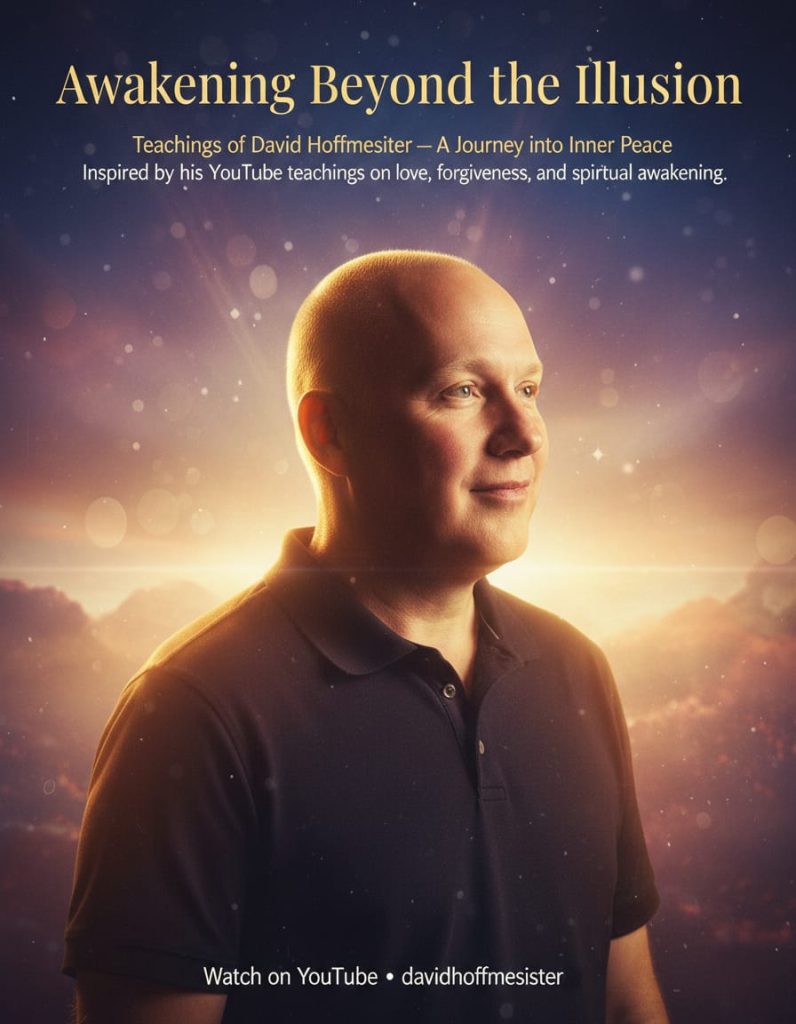
In contemporary spiritual discussions, David Hoffmeister Wikipedia introduces the teachings of a spiritual teacher who presents inner peace as a structured mental discipline rather than a mystical concept. His philosophy centers on perception correction, forgiveness, and consistent awareness as the foundation for emotional stability and spiritual clarity.
Introduction
Modern life creates constant psychological pressure. Deadlines, expectations, social comparison, and digital overstimulation keep the nervous system in a heightened state. Many individuals attempt to escape stress by changing circumstances. However, external change rarely guarantees internal peace.
David Hoffmeister’s teachings emphasize a fundamental shift: peace is not dependent on circumstances but on interpretation. The mind assigns meaning to events, and meaning determines emotional response. When interpretation changes, emotional experience changes.
This framework makes spiritual growth practical. Instead of chasing better situations, individuals refine perception.
Perception as the Root of Experience
Every emotional reaction originates in thought. An event occurs, the mind interprets it, and the body responds emotionally. Most people assume the event causes the feeling. Hoffmeister challenges that assumption.
Consider these examples:
- A canceled plan can feel like rejection or like free time.
- A mistake can feel like failure or like learning.
- Silence can feel threatening or peaceful.
The external situation remains neutral. Interpretation creates experience.
When individuals become aware of this mechanism, they reclaim authority over emotional responses.
Awareness: Observing Without Attachment
Awareness is not about suppressing thoughts. It is about observing them without immediate identification.
When a negative thought arises, instead of reacting automatically, one pauses and asks:
- Is this interpretation accurate?
- Is there another possible explanation?
- Does holding this thought support peace?
This questioning weakens emotional intensity.
Over time, awareness becomes habitual. Instead of being controlled by thought, individuals witness thought. This shift reduces reactivity and increases clarity.
Forgiveness as Cognitive Realignment
Forgiveness is central to Hoffmeister’s philosophy. However, it is framed as internal release rather than moral obligation.
Resentment reinforces the belief that another person controls emotional peace. Forgiveness restores internal control.
It means choosing not to maintain a grievance-based interpretation.
Psychologically, this reduces:
- Rumination
- Emotional tension
- Stress hormone activation
- Interpersonal conflict
Forgiveness is repeated whenever disturbance appears. It is a continuous recalibration process.
Present-Moment Discipline
The mind frequently oscillates between past and future.
- Regret revisits past events.
- Anxiety imagines future problems.
Neither exists in real time.
Present-moment awareness interrupts this cycle.
Simple practices include:
- Observing breathing rhythm
- Noticing physical sensations
- Listening attentively without mental commentary
- Redirecting focus from imagined scenarios
Present awareness stabilizes cognition and lowers stress response.
Emotional Regulation Through Interpretation Shift
Emotional regulation becomes easier when individuals intervene at the thought level.
For instance:
Instead of thinking:
“This always happens to me.”
Reframe to:
“This is one event. I can respond calmly.”
Instead of thinking:
“They are disrespecting me.”
Reframe to:
“I don’t fully understand their intention.”
These shifts alter emotional output immediately.
This approach does not deny reality; it prevents exaggerated interpretation.
Overcoming Internal Resistance
Spiritual discipline often encounters resistance. The mind prefers familiar patterns, even if those patterns generate stress.
Common obstacles include:
- Seeking dramatic breakthroughs
- Doubting subtle progress
- Comparing personal growth to others
- Overanalyzing spiritual concepts
Hoffmeister’s approach emphasizes consistency over intensity.
Subtle improvements—less irritation, quicker emotional recovery, reduced overthinking—indicate genuine transformation.
Practical Integration into Daily Life
These principles are designed for daily application.
In work environments:
- Pause before responding to criticism.
- Question defensive thoughts.
In relationships:
- Release resentment quickly.
- Communicate with clarity instead of emotion.
In personal reflection:
- Review the day without self-judgment.
- Identify moments where perception shifted positively.
Spirituality becomes integrated rather than compartmentalized.
Long-Term Psychological Impact
With sustained practice, individuals typically experience:
- Decreased emotional volatility
- Improved concentration
- Greater patience
- Increased resilience
- More stable self-confidence
Peace transitions from temporary relief to baseline state.
Rather than being dependent on favorable outcomes, emotional stability remains steady regardless of circumstances.
The Gradual Nature of Awakening
Awakening is often misunderstood as a dramatic event. In Hoffmeister’s framework, it is gradual perception refinement.
Each time awareness interrupts reactivity, awakening deepens.
Each time forgiveness replaces resentment, clarity expands.
Each time presence replaces projection, stability strengthens.
This accumulation of small shifts produces lasting transformation.
Conclusion
The teachings associated with David Hoffmeister Wikipedia outline a disciplined path toward perception mastery and emotional clarity. By observing thoughts, practicing forgiveness, and maintaining present-moment awareness, individuals can transform their internal landscape without relying on external change.
Inner peace, in this model, is not accidental. It is cultivated through consistent mental refinement. When perception aligns with clarity rather than fear, emotional freedom becomes sustainable.
Frequently Asked Questions (FAQ)
Who is David Hoffmeister?
David Hoffmeister is a spiritual teacher known for emphasizing forgiveness, perception correction, and awareness inspired by A Course in Miracles.
What is the core of his teaching?
The central idea is that perception determines emotional experience, and correcting perception restores peace.
Is forgiveness required for inner peace?
Yes. Forgiveness releases grievance-based thinking that disturbs emotional balance.
How quickly can results appear?
Subtle improvements can appear quickly, but lasting change requires consistent practice.
Can this approach reduce stress?
Yes. By reducing reactive interpretation, stress naturally decreases.
